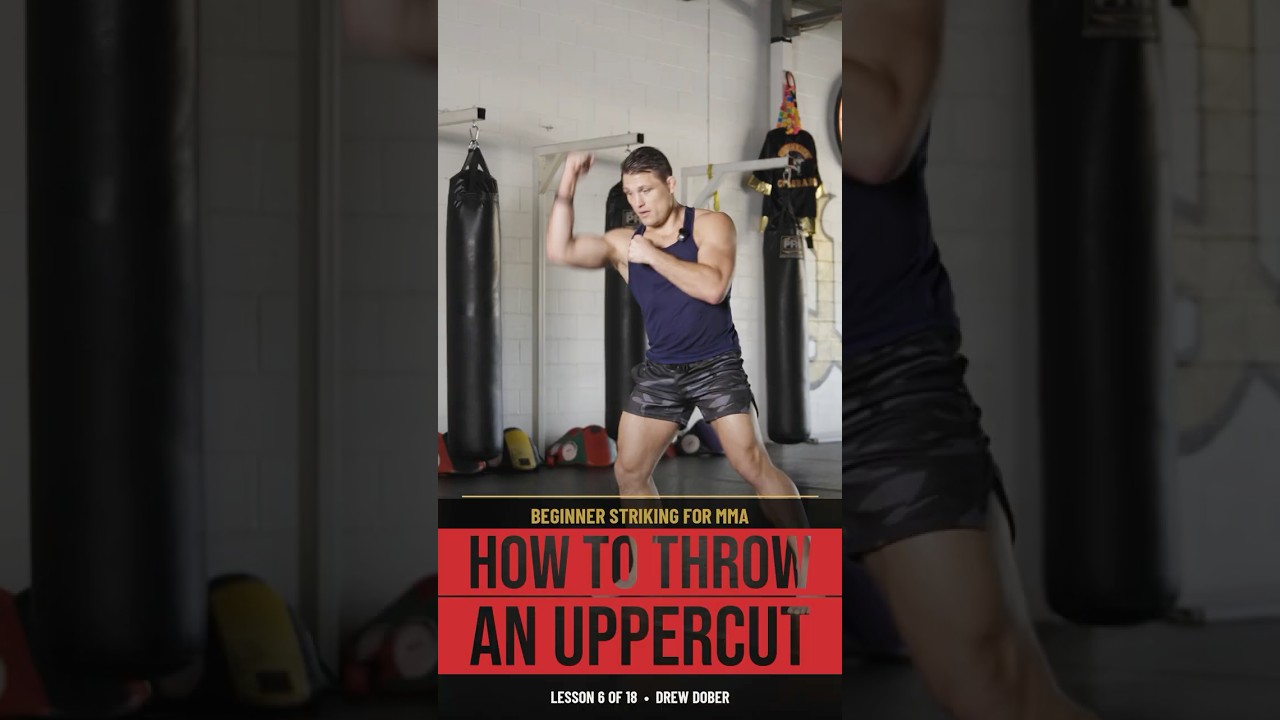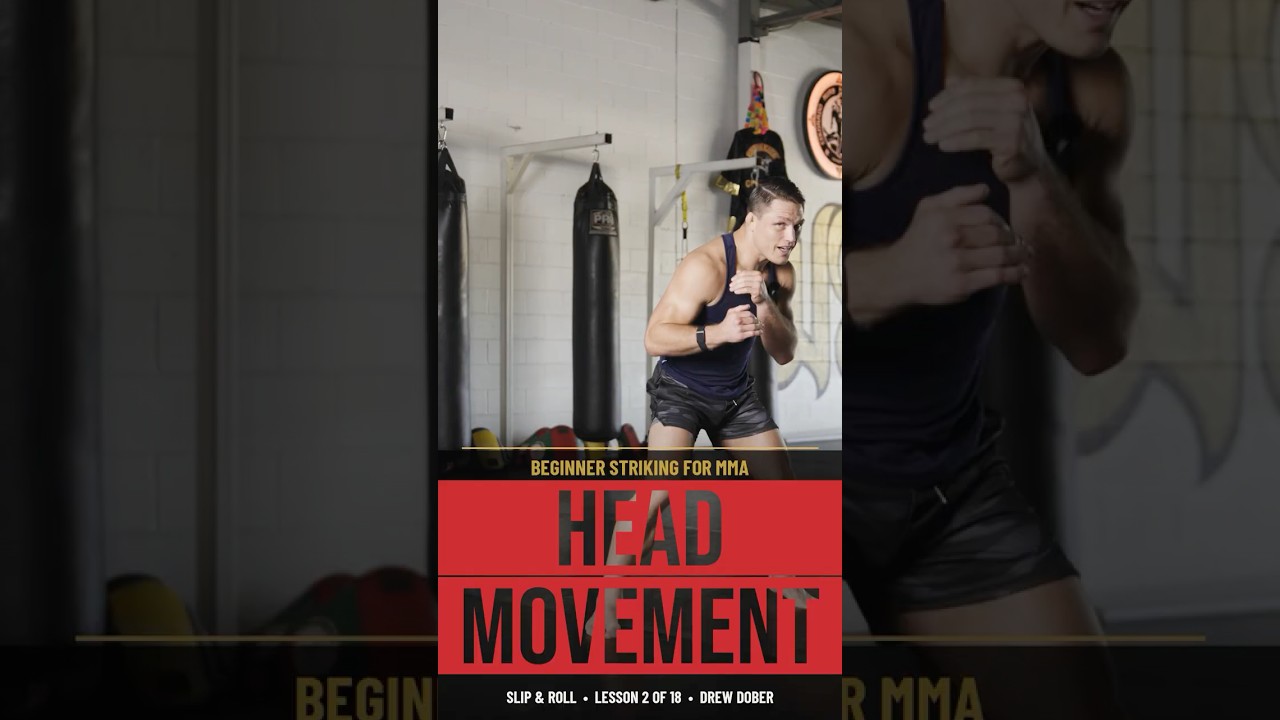
Head movement in MMA is different from boxing. UFC lightweight Drew Dober breaks down how to slip and roll without getting caught with kicks or takedowns.
Key Takeaways
This is how you move your head for mixed martial arts. Head movement in MMA is not the same as boxing. If you try to do big, sweeping boxing slips in a cage, you’re going to get caught with a kick or a knee. We have to keep it tighter. We have to keep it more subtle.
Watch the full breakdown in the video above. This is Lesson 2 of 18 in my beginner striking series.
In boxing, you can commit to a deep slip because there’s nothing below your waist coming at you. Kicks don’t exist. Knees don’t exist. Takedowns don’t exist.
In MMA, all of that exists. A big exaggerated head movement leaves your neck exposed to a knee coming up the center. It leaves you off-balance and easy to shoot on. So, we want to make our head movement tight. A little bit more subtle. It still works. It just can’t be the same mechanics as a pure boxing gym.
The rule is simple: keep it compact, keep it controlled, and always land back in your fighting stance.
The first type of head movement I want us to work is the level change. This is the up and down.
We get into our fighting stance here. Hands up. And as we do our level change, we bend at our knees. Not at our waist. This is important. Bending at the waist puts your head in a bad spot and takes your eyes off your opponent. We never want to look at the floor.
Bend at the knees. Dip down. Come back up. That’s it. It sounds simple because it is. But most beginners default to bending at the waist, and that’s how they eat knees.
The level change is also what you’re doing when you change heights between a body shot and a head shot. It’s a useful movement on its own, and it combines with everything else we’re going to build on top of it.
Now, the slip is your left and right head movement. We’re getting off the center line so an incoming punch passes by instead of landing.
Here’s what I want us to focus on: when we slip, we’re not just moving our head. We’re moving our shoulder and our knee together. As I slip, I dip the shoulder and the knee on the same side. The head moves because the body moves. That’s the right sequence.
In boxing, it’s okay to stay in place when you slip. You can plant your feet and dip. For MMA, I want us to step with the slip. As we move off the center line, our feet move with us. This keeps us balanced and takes us out of a bad position in case someone is looking to shoot.
So, slipping left: step left, dip shoulder and knee, head moves. Slipping right: step right, same thing. Always landing back in a position where we can immediately fire back or defend.
The roll is what we do when we want to get underneath a punch or work out of a tight exchange. We’re slipping first, and then instead of coming straight back up, we dip our head in a U fashion. Down on one side, through the middle, back up on the other side.
Picture getting underneath a rope. We slip, we move the head in that U shape, and we come back up in our regular fighting stance on the other side.
For MMA, we’re bending and twisting at our knees and our hips. Not at our waist. When there are knees coming down the center, bending at the waist puts our face right in the path of them. Bending at the knees and hips keeps our head off the center line and our posture intact.
We never want to look at the floor during any of this. Eyes stay forward. Head stays up.
So, the full motion we’re building here is: up and down, left, right, weave, weave. Level change, slip left, slip right, roll left, roll right. Over and over until it’s automatic.
Make sure we move our feet. Every single time. Head movement without footwork is half the job. We need to land in a position where we can throw something back, take the fight somewhere, or create distance. If our feet aren’t moving with us, we’re just rocking back and forth and hoping for the best.
Start slow. Work each piece separately. Level change on its own. Slips on their own. The roll on its own. And then start connecting them. Slip into a roll. Level change into a slip. This is also why getting your stance and footwork for MMA right first matters so much. If your base is off, your head movement is off before it starts.
Bending at the waist. Every single time.
I see it constantly. Someone slips and their whole upper body folds forward, head down, no vision, completely off-balance. The head goes where it needs to go, but everything else is wrong. They’re slower coming back up. They can’t see what’s coming. And they’ve given up every counter opportunity.
Keep the bend at the knees. Keep the eyes forward. That posture lets us see the whole fight and stay in a position to respond. The moment you get off the line with a clean slip, you’re set up to come back with a jab or a hook before your opponent can reset.
Work this until it’s a reflex. We’re not thinking about head movement when the punches are coming. We’re not deciding where to go. It’s already happened. That’s what drilling this builds.
Drew Dober is a UFC Lightweight with 11 knockout wins, the all-time record in the division.
Why can't I just use boxing head movement in MMA?
In boxing, nothing is coming at your legs, so you can commit to a deep slip. In MMA, a big exaggerated slip leaves you off-balance and exposes your neck to a knee up the center. We have to keep it compact.
What is a level change in MMA striking?
A level change is your up-and-down head movement. You bend at the knees to dip down and come back up. It's the same motion you use when switching between a body shot and a head shot.
How is slipping in MMA different from boxing?
In boxing, you can plant your feet and dip to slip. In MMA, we step with the slip. As you move off the center line, your feet come with you. That keeps you balanced and out of position for a takedown.
What is a roll in MMA head movement?
The roll is a U-shaped motion under an incoming punch. You slip to one side, move your head in a U shape through the low point, and come up on the other side back in your fighting stance.
What is the single most common mistake beginners make with head movement?
Bending at the waist instead of the knees. When you fold at the waist, your head goes down, you lose vision, you're slower coming back up, and every counter opportunity is gone.
Drew Dober · Inner Circle