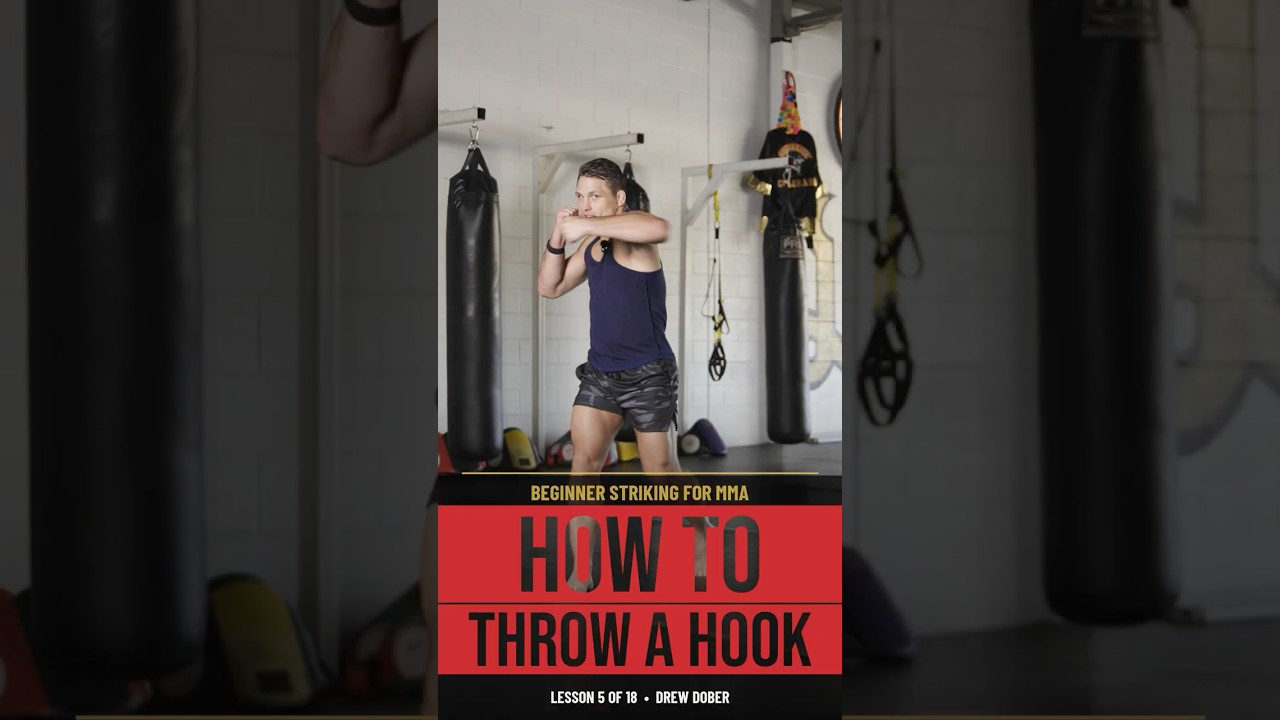
The hook is your best punch at close range. UFC lightweight Drew Dober breaks down hand position, foot rotation, and how to generate power in the hook for MMA.
Key Takeaways
This is how you throw your boxing hooks for MMA. The hook is your best punch at close range. It comes from the side, it’s hard to see, and when it lands with proper mechanics it carries serious power. This is Lesson 5 of 18 in my beginner striking series.
Watch the full breakdown in the video above, then work through the mechanics below.
So, the way I teach hooks is from a square stance first. It should look very similar no matter how you stand. Teaching it square makes the mechanics obvious because we can see exactly what the legs and hips are doing without the offset of a fighting stance getting in the way.
If you’re right-hand dominant, your right hand is in back. I’m left-handed, so I fight southpaw. Either way, the hook mechanics are the same.
Once the square stance makes sense, we move into our fighting stance and the technique transfers directly.
The power in the hook starts at the feet. I want to be able to twist and rotate with our knees, and our feet are going to move against the mat like you’re squishing a bug.
That’s the cue. Think about squishing a bug under your foot. The ball of the foot pivots, the knee rotates inward, and that rotation drives through the hip and shoulder. This is where the hook gets its power. As I’m twisting, I’m giving my hip, my knee, and my shoulder all at once. That’s how we generate power.
If the foot doesn’t rotate, the hip doesn’t drive. If the hip doesn’t drive, the hook is just an arm. Work the foot rotation first, separately from the arm, until it feels natural. Then add the punch.
Now, our hand position for the hooks. Always, we want to make sure we’re hitting with our front two knuckles.
The way I like to hold my hand is like you’re holding a cup of coffee. Thumb faces up. The elbow comes up to shoulder height, the knuckles point toward the target, and the thumb stays up through the entire punch.
I know we were taught different ways. I don’t like throwing it with the thumb turned forward because you catch the wrong knuckles, and I feel like the elbow isn’t stable enough to generate the power. With the thumb up, my elbow is stable, and with my front two knuckles leading, I can really push that hook on the follow-through.
So: pick the elbow up, point the knuckles toward the target, thumb faces up, and then I just twist my body into it. That’s the punch.
As we hold our hands in our fighting stance, we pick our lead elbow up to shoulder height and point the knuckles toward the target. Thumb faces up. And then we twist.
The foot rotates. The knee drives inward. The hip turns. The shoulder follows. The arm is delivering what the body is generating. The punch travels horizontally from the side and arrives at the target at the same time as the hip finishes its rotation.
The smaller the glove, the more critical it is that we’re hitting with those front two knuckles. In MMA gloves or bare-fisted, this matters. Land on the wrong part of the hand and we’re hurting ourselves instead of our opponent.
The rear side is the same mechanics. Elbow comes up, thumb points up, and then we twist from the back side.
The rear hip has more distance to travel, which means more torque. The rear hook can carry more power than the lead, but it’s also slower to arrive. Use the lead hook to set up the rear hook. Work them as a pair.
Both sides: squishing a bug, thumb up, hit with the front two knuckles, and follow through.
Throwing the hook with the elbow dropping or the hand turned the wrong way.
When the elbow drops below shoulder height during the hook, the punch loses its angle. Instead of coming in horizontally from the side, it starts to arc downward. The power dissipates and you’re more likely to catch your opponent on the top of their head than on the chin where it matters.
Keep the elbow up at shoulder height. Keep the thumb up. The elbow being horizontal and stable is what gives the hook its leverage. Once you have the hook working, it pairs naturally with the cross to form one of the most effective two-punch combinations in striking.
Start with the square stance. Feet shoulder-width apart, no fighting stance offset. Work just the leg rotation first. Pivot the ball of the foot, rotate the knee, feel the hip turn. Do this without throwing a punch until it’s automatic.
Then add the arm. Still in the square stance. Pick the elbow up, hold it like a cup of coffee, and rotate into it. Focus on hitting with the front two knuckles every time.
Move into the fighting stance once the mechanics feel clean. Work lead hook, rear hook, and then the combination together. Build it slow, then build speed on top of good form.
The hook is the punch that changes close-range exchanges. Get the mechanics right and it becomes one of the most effective weapons in your game. If you want to see how the hook fits into a full striking system, check out the breakdown on stance and footwork for MMA to make sure you’re building the hook from a solid base.
Drew Dober is a UFC Lightweight with 11 knockout wins, the all-time record in the division.
Why is the hook the best punch at close range?
It comes from the side, it's hard to see, and when it's thrown with proper mechanics it carries serious power. At close range, straight punches lose their angle. The hook still works.
How do you generate power in the hook?
The power starts at the feet. You pivot the ball of your foot like you're squishing a bug under it. That pivots the knee inward, which drives the hip, which drives the shoulder. The arm is delivering what the body already generated. If the foot doesn't rotate, the hip doesn't fire and the hook is just an arm swing.
How should you hold your hand for the hook?
Like you're holding a cup of coffee. Thumb faces up, elbow at shoulder height, knuckles pointed toward the target. Hit with your front two knuckles. Don't turn the thumb forward or you'll catch the wrong knuckles and the elbow won't be stable enough to generate power.
What happens when the elbow drops during the hook?
The punch loses its angle. Instead of coming in horizontally from the side, it starts arcing downward. The power dissipates and you end up hitting the top of their head instead of the chin. Keep the elbow at shoulder height the whole time.
Should you throw the lead hook or rear hook first?
Lead first, rear second. The lead hook is faster. The rear hook carries more power because the hip has more distance to travel and generates more torque, but it arrives slower. The lead hook sets up the rear hook. Work them as a pair.
Drew Dober · Inner Circle