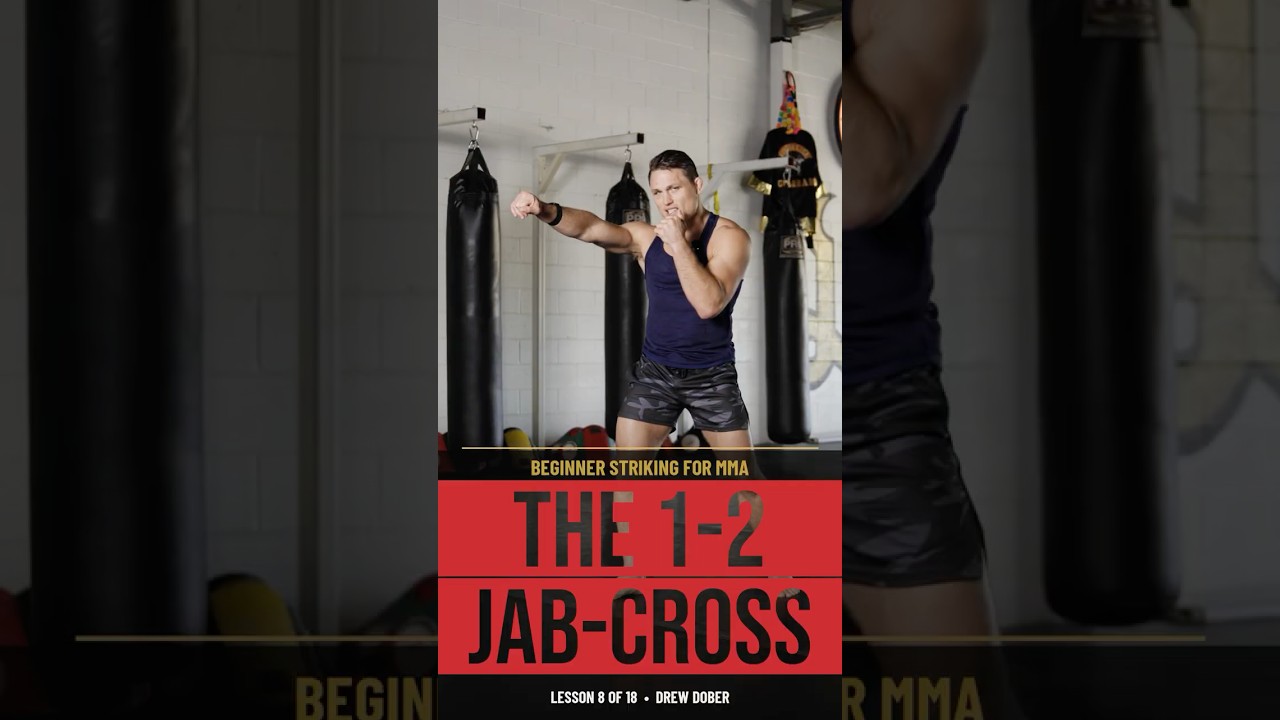
UFC knockout artist Drew Dober breaks down the jab-cross combination for MMA: mechanics, footwork, the laser pointer concept, and how to make the 1-2 a fight-ending tool.
Key Takeaways
The 1-2 is the most fundamental striking combination in MMA. Every fighter who has knocked someone out cleanly has thrown thousands of these. It is a range finder, a disruptor, and when you land it right, a fight-ending combination. Here is exactly how it works and why each piece matters.
Before you can throw this combination well, you need to understand what each punch is for. They are not the same punch thrown twice.
The jab is the laser pointer. Wherever my jab goes, that is where the cross is going to go. The jab finds the target. It disrupts. It creates problems for your opponent and occupies their attention. In a fight, a sharp jab makes your opponent think about defense, which is exactly when you do not want them thinking clearly. If you want to build a strong, reliable jab before you run this combination, start there.
The cross is the shotgun. It follows the laser. When the jab lands and gets your opponent reacting, the cross finishes. The two punches are one system: the jab finds it, the cross finishes it.
This is also why the combination works as a range finder. The jab measures the distance. If it gets there clean, you know the cross can too.
Both the jab and cross are straight punches. They come out from your cheeks, not from your hip or your ear. Your elbows stay in tight as they extend. That tight elbow path keeps the punches compact and difficult to read. A wide, looping punch gives your opponent time to react. A punch that travels straight to the target takes that time away.
The power comes from rotation, not from pushing. As you extend and your elbow comes out with the movement of your body, you turn your thumb from pointing up to pointing down. That twist is what generates the force. Without it, you are reaching. With it, you are punching with your whole body behind the shot.
The one-two is not a stationary combination. If your feet are planted when you throw it, you are leaving power and pressure on the table.
When the jab goes, your lead leg steps forward at the same time. You are closing distance and putting body weight behind the punch in one motion. When the cross comes, your rear leg steps forward as well. You step with your punches, twisting and rotating on each one, especially the cross.
This footwork is the piece most beginners skip. They stand still and throw. You need to be moving into the combination. The step makes the punch heavier and it puts you in a better position for whatever comes next. If your stance and footwork fundamentals are not locked in yet, get those right first.
After the jab lands, the lead hand pulls back as the cross comes out. I think of it like controlling an old puppet. As one hand comes out, the other comes back. They work in a rhythm with each other, and that rhythm is what makes the combination fast and connected rather than two separate punches with a pause between them.
There are a couple of reasons this matters. Pulling the jab hand back quickly keeps it from hanging out in front as a target. It also helps generate the rotation that powers the cross. The pull and the push happen at the same time, and that coordinated movement is what makes the 1-2 feel like a single fluid action when it is done right.
At the end of the combination, both hands return straight back to your face. Always. Your hands go straight back to guard after every punch. A hand that floats after a combination is an invitation for a counter.
Put the whole combination together: jab as your lead leg steps forward, rotate into it, good position, then the cross as your rear leg steps in, twist and rotate through the punch, and bring both hands straight back to your face.
Jab, step. Cross, step. Rotate on both. Return to guard.
That is the 1-2 at full speed. Slow it down in shadow work first and get each phase right before you add speed. The step needs to happen with the punch, not before or after it. The rotation has to carry all the way through, especially on the cross. Get those pieces synchronized and the combination starts to feel like one movement.
By the time you are drilling the 1-2, you should have your head movement, your footwork, and your jab already established from the earlier lessons in this series. The combination is where those elements come together. You are not learning entirely new mechanics here. You are putting the pieces in sequence.
Drill the full combination on the heavy bag. Pay attention to whether the bag is moving from the cross, not just from the jab. If the cross is not landing with pop, check the rear leg step and the hip rotation. The power lives in the twist.
Shadow it without a bag too. Get comfortable being in motion as you throw. A combination thrown while moving is a more dangerous combination than one thrown from a flat-footed stance.
Once you have the 1-2 dialed in, the next step is building on it with the cross hook, which takes everything you have established here and turns it into a finishing combination.
The jab finds it. The cross finishes it. Build that rhythm and you have a foundation you can build anything else on top of.
To learn more and get first access to my knockout instructional series, go to Drew Dober and sign up for the newsletter.
What is the purpose of the jab in the 1-2 combination?
The jab is the laser pointer. It finds the target, measures distance, and occupies your opponent's attention. When they are reacting to the jab, they are not thinking clearly, and that is exactly when the cross lands.
Where do straight punches come from?
They come out from your cheeks, not from your hip or your ear. Keep your elbows in tight as they extend. A wide, looping punch gives your opponent time to react. A punch traveling straight to the target takes that time away.
How does the footwork work with the jab-cross?
When the jab goes, your lead leg steps forward at the same time. When the cross comes, your rear leg steps in as well. You step with every punch and rotate on each one. Planting your feet means leaving power and pressure on the table.
What is the puppet rhythm Drew talks about?
As the jab fires and the lead hand comes out, the cross pulls back. As the cross fires, the jab hand pulls back to your face. One hand comes out as the other comes in. That coordination is what makes the combination fast and connected instead of two separate punches with a gap between them.
How do you generate power in the cross?
The power comes from rotation, not pushing. As you extend the cross, your thumb rotates from pointing up to pointing down. That twist through the punch, combined with the rear leg step and hip rotation, is what puts the whole body behind the shot.
Drew Dober · Inner Circle