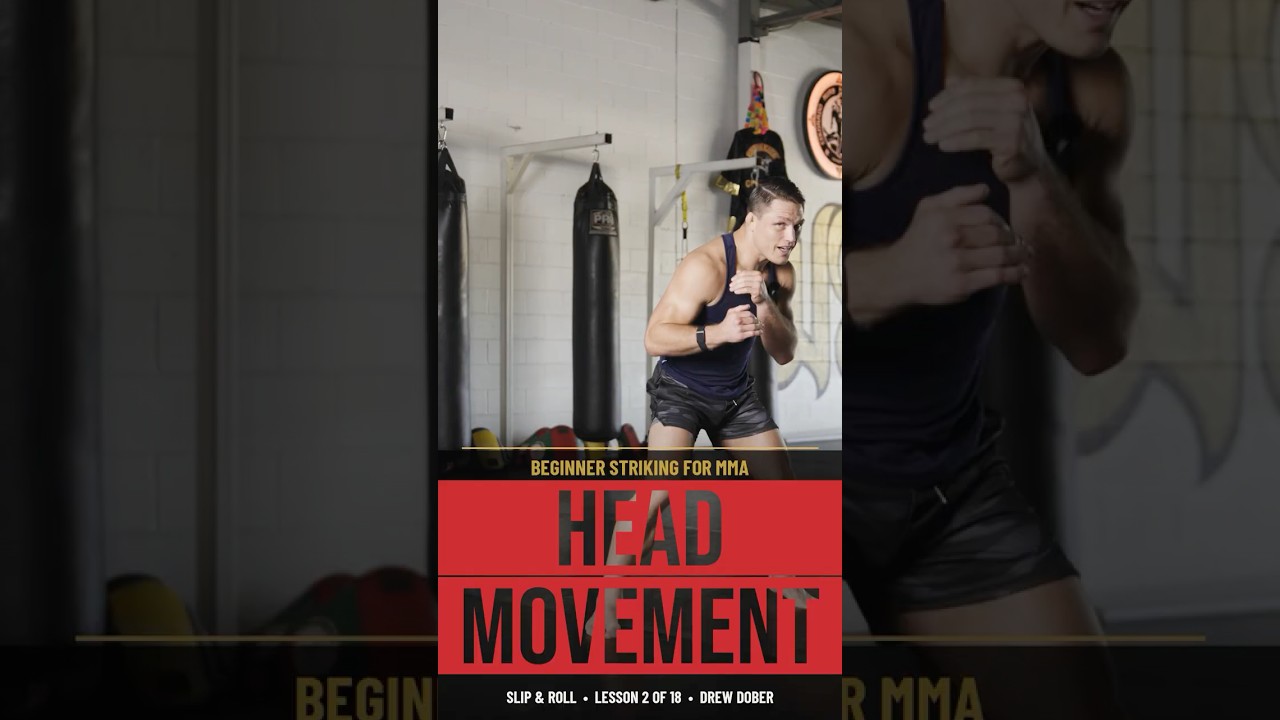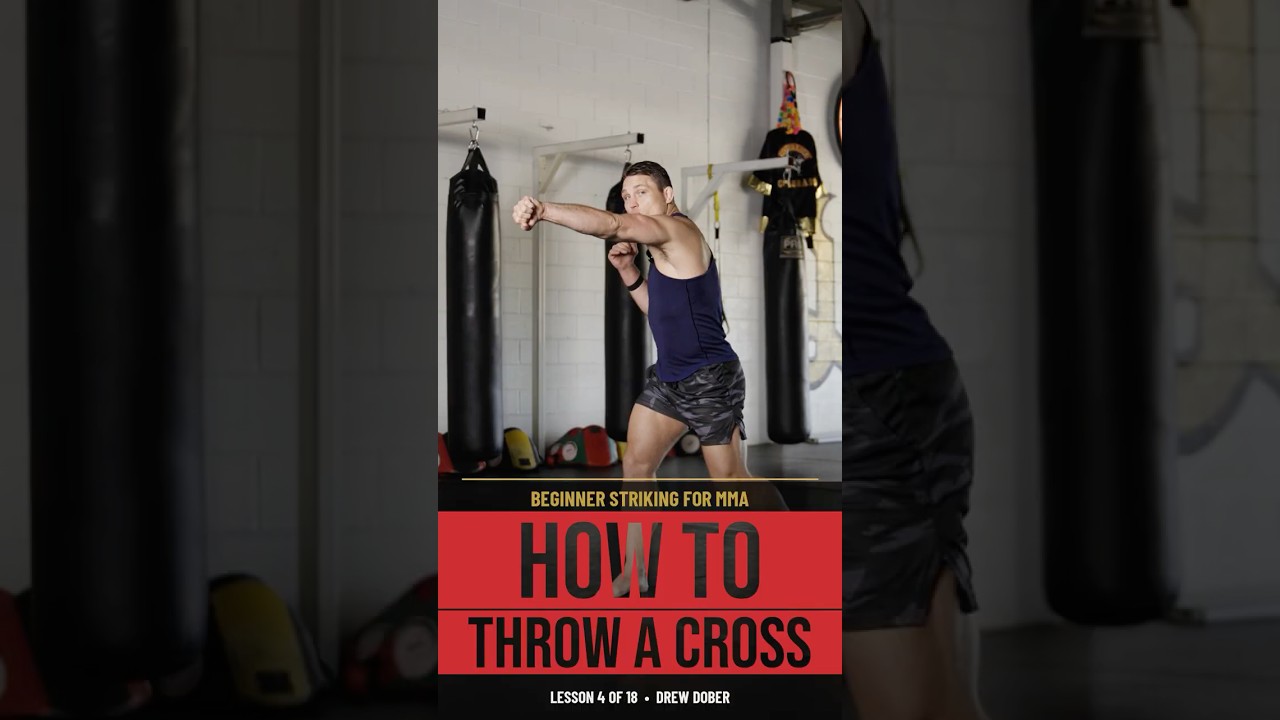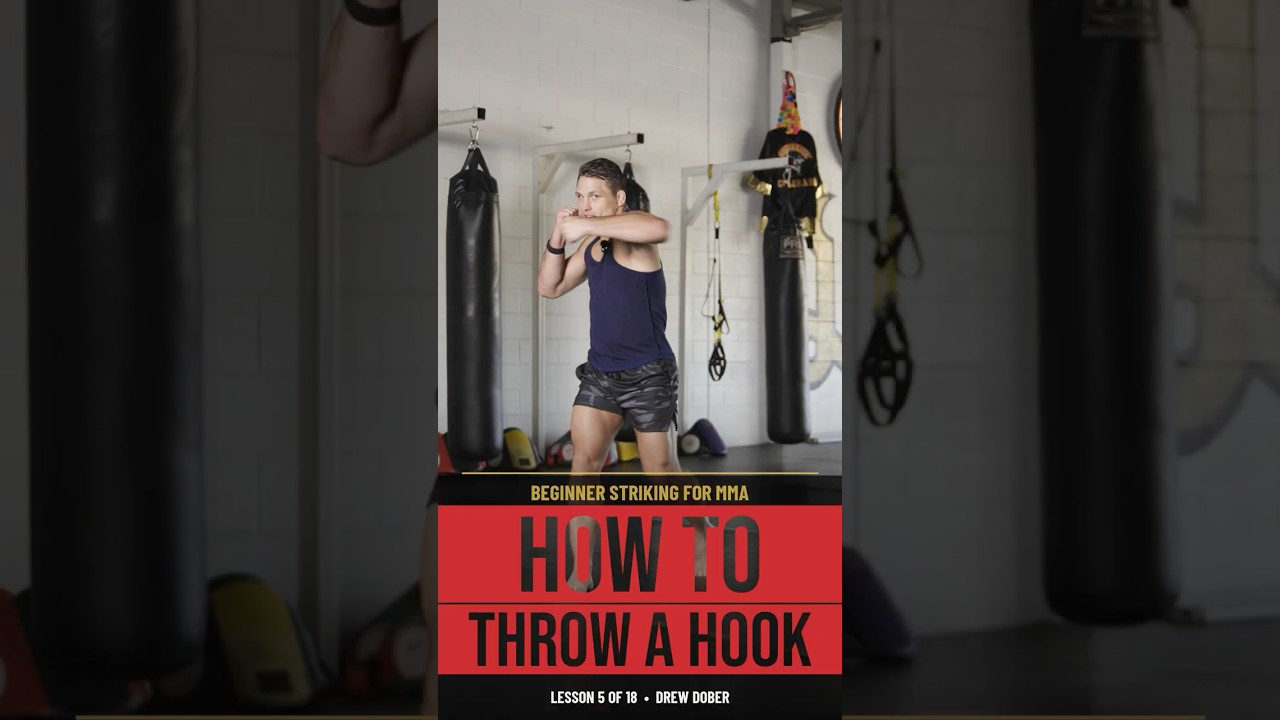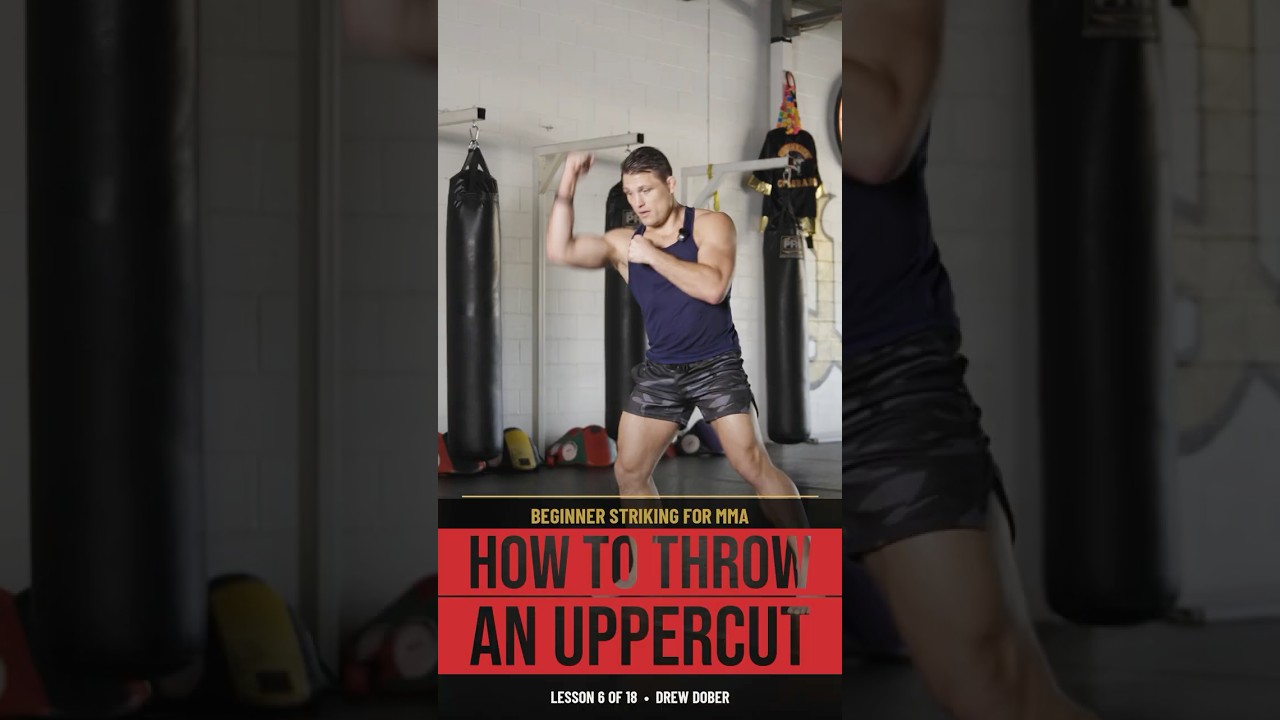
The uppercut attacks from below the guard and lands when your opponent least expects it. UFC fighter Drew Dober breaks down how to throw an uppercut for MMA.
Key Takeaways
I’m going to show you how to throw an uppercut for mixed martial arts. The uppercut attacks from the bottom and moves up. It slips under the guard and lands on the chin when your opponent isn’t looking for it. And in MMA, where people are constantly level changing and looking for takedowns, this punch has more opportunities than in any other combat sport.
Watch the full breakdown in the video above. This is Lesson 6 of 18 in my beginner striking series.
The uppercut isn’t a long-range punch. It’s not the weapon you open with from the outside. But get inside with someone, and it becomes one of the most dangerous tools you have.
It works really well in three situations. First, against opponents who are level changing. Any time someone dips to shoot for a takedown, their head comes down and forward. That’s exactly where the uppercut is traveling. Second, when their head is coming down low for any reason. Tall fighters who fold forward when they take body shots. Wrestlers who use a lot of forward pressure. Anyone who gets low in their stance. Third, up against the cage. In the clinch, the uppercut creates real damage and disrupts their position at the same time.
So in MMA specifically, the uppercut has two jobs: it punishes takedown attempts, and it works in close range where your other punches lose their angle.
Here’s where most people get it wrong.
The power in the uppercut doesn’t come from your arm. It doesn’t come from winding up or dropping your hands. The power comes from your legs and your hip.
We want to get into our fighting stance here. Dominant hand in back. Knees bent. That knee bend is actually the first movement of the uppercut. I’m bending at the knees to load the punch. I’m not dropping my hands down to wind up. I’m not dropping my head. Just the knees.
If anyone has worked power cleans in high school lifting, this is the same idea. We generate our hip forward as we throw the uppercut. Bend the knees, then extend the hip. That hip extension is where the force comes from. The arm is just delivering it.
So the sequence looks like this: get into your stance, bend at the knees, extend your hip, release the punch upward. You can bend straight down or you can give a slight shoulder dip depending on the angle you want. But the starting point is always the knees, not the arm.
Now here’s the detail that matters for MMA.
When we throw the uppercut, I always want our palms facing toward us. Not thumbs pointing toward me. Palms toward me.
The reason: if your thumbs point toward you when you throw the uppercut, you’re hitting with the wrong knuckles. We want to hit with our primary knuckles in the front. When the palm faces toward you and you release the elbow from your body punching upward, those front two knuckles land the way they’re supposed to.
Think about it from the setup position. As we dip, whatever hand you’re throwing, palm faces toward you. As you extend your hip, you release your elbow from your body punching upward. Elbows stay in tight during the setup. Once you release, the punch travels straight up.
The palm-toward-you cue is the simplest way to make sure you’re always landing clean. Use it every time.
The uppercut is a close-range punch. That’s just the reality of how it’s built. You need to be inside someone’s arms for it to land.
So as we’re putting our hands on people, now we’re able to throw the uppercut upward. Against a wrestler who’s level changing with us, we can throw it to deter the takedown or cause damage up against the cage. When someone clinches up or puts their head into our chest, that’s the moment.
The flip side is you have to earn the position first. The uppercut as a lead punch from the outside is going to miss, and you’re going to be out of position when it does. Use the jab and the cross to close the distance. Use a body shot to get their attention down. Get inside. Then the uppercut is there.
There’s also a shuffle uppercut, where you close the distance with a shuffle step before releasing the punch. That’s a more advanced version. For now, the basic uppercut from inside position is enough to work with.
Start with the mechanics. Get in your fighting stance and practice the dip and hip drive without throwing the punch. Feel the knee bend. Feel the hip extension. Do it slowly. 20 times on each side. The arm doesn’t do anything yet.
Then add the punch. Dip, extend the hip, release the elbow from the body punching upward. Palms toward you. Keep the elbow in tight on the way up. 20 reps each side.
Take it to the heavy bag and practice it from inside range. Don’t step back and throw it. Step in, get your hands on the bag, then throw the uppercut. That’s the realistic setup.
If you have a partner, work it off the clinch. As they level change or pressure in, dip and release the uppercut. The combination of level change and uppercut is one of the most natural-feeling exchanges in MMA once you’ve drilled it a few times.
Elbows in tight. Palms toward you. Drive from the knees. That’s the uppercut.
Drew Dober is a UFC Lightweight with 11 knockout wins, the all-time record in the division.
When should you throw the uppercut in MMA?
It works best in three situations: against opponents who are level changing for a takedown, against fighters who drop their head low for any reason, and up against the cage in the clinch. In MMA, the uppercut punishes takedown attempts and creates real damage in close range where other punches lose their angle.
Where does the power in the uppercut come from?
Your legs and your hip. You bend at the knees to load the punch, then extend the hip to generate the force. Think of it like a power clean: the hip extension is where the force comes from. The arm is just delivering it. Do not drop your hands or wind up to add power.
How should your palm face when throwing the uppercut?
Palms toward you, not thumbs toward you. When the palm faces toward you, your front two knuckles land the way they're supposed to. If your thumbs point toward you, you're hitting with the wrong knuckles.
Can you throw the uppercut as a lead punch from the outside?
No. The uppercut as a lead punch from the outside is going to miss and leave you out of position. Use the jab and the cross to close the distance first. Use a body shot to pull their attention down. Get inside. Then the uppercut is there.
What is the shuffle uppercut?
A more advanced version where you close the distance with a shuffle step before releasing the punch. It's a real technique but the basic uppercut from inside position is what beginners should work with first.
Drew Dober · Inner Circle