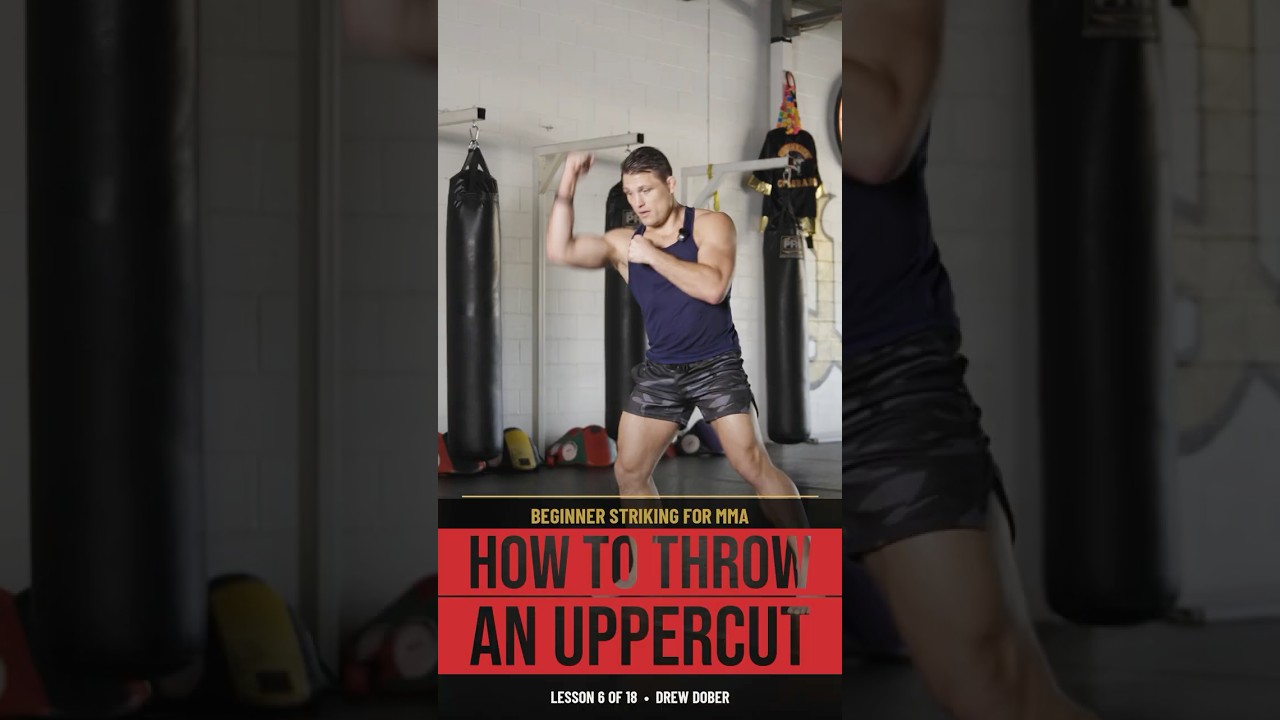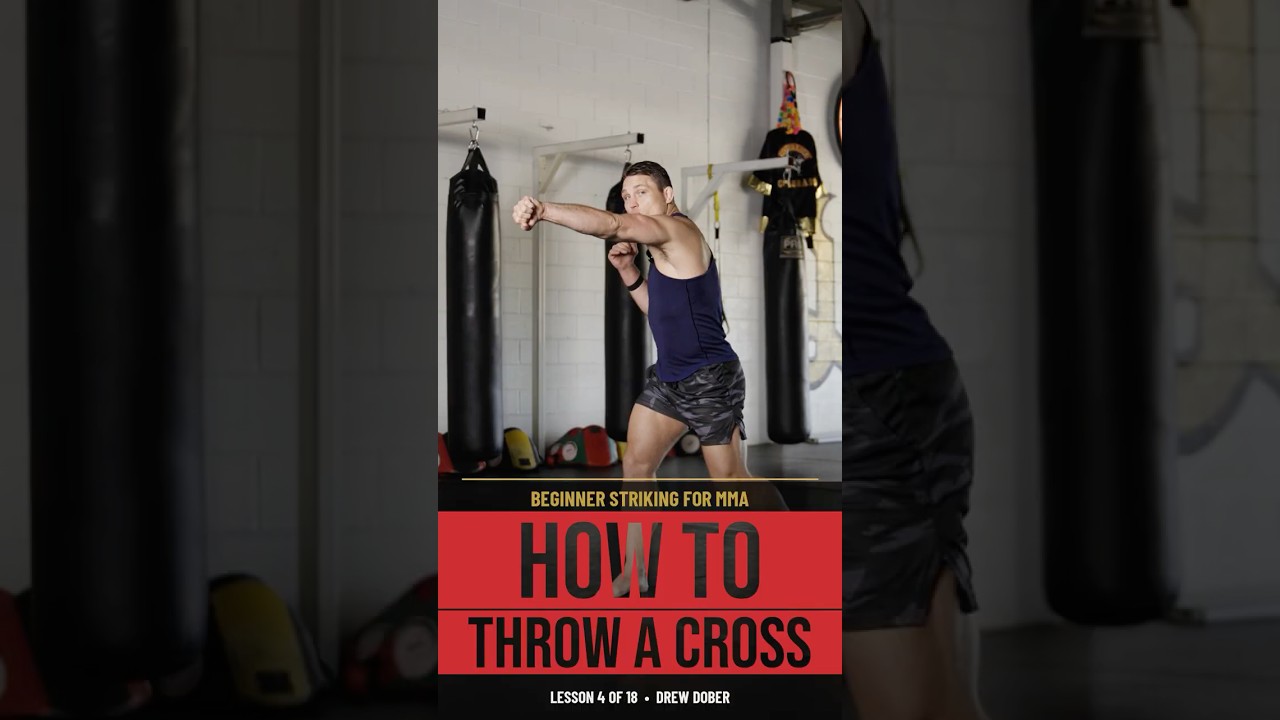
The cross is your power punch in MMA. UFC lightweight Drew Dober breaks down how to generate force from the ground up and throw the cross without getting countered.
Key Takeaways
This is how you throw the cross for mixed martial arts. The cross is your power punch. It comes from your dominant hand, it travels in a straight line, and when it lands clean, it ends fights. That’s what the cross is for.
Watch the full breakdown in the video above. This is Lesson 4 of 18 in my beginner striking series.
Let’s set up the stance first. The cross comes from our rear side. Whatever your dominant hand is, that hand is in the back. Right-hand dominant means you’re orthodox, right hand in back. Left-hand dominant means you’re southpaw, left hand in back. I’m left-handed, so I stand southpaw and my cross is my left hand.
The cross is a punch that generates power. That means it needs full commitment from our body. Balance is required. And we have to stay defensively responsible the entire time.
This is the part most beginners miss. The power in the cross doesn’t come from the arm. It starts at the floor and travels up through the body.
As I throw my cross, I shift my weight from my rear leg to my lead leg. As I do that, I turn my rear knee inward and point my heel out. That rotation at the knee collapses the hip forward. The hip drives the shoulder forward. And the shoulder launches the arm.
Hip, shoulder, arm. In that sequence. That’s where the power comes from.
I begin the twist at floor level. Before my hand moves, the foot and knee are already rotating. As my shoulder starts coming forward from that rotation, then I release my hand. Not the other way around. If the arm starts moving before the body, we’re just throwing an arm punch. Arm punches don’t finish people.
Now, as the cross is traveling, we do not want our elbow to come up.
An elbow that rises during the cross does two things wrong. First, it reduces power because the shoulder can’t transfer into the punch cleanly. Second, it exposes the chin. When that elbow comes up, there’s a clear lane for an incoming left hook from your opponent.
Think about throwing this punch in a narrow hallway. The walls are right there. The elbow can’t come out. That’s the feeling we want: tight, controlled, driving straight forward.
As the punch extends, we twist our thumbs downward at the last second. Same principle as the jab. The rotation is at the end, not the beginning.
The cross leaves us committed. When we throw it, we’re shifting weight forward and turning our whole body into the punch. That’s what makes it powerful. It’s also what makes us vulnerable if we miss or get countered.
So, the rear hand is out and the lead hand should be pulling back slightly through the throw. This keeps tension on that side and maintains the shoulder as a partial shield. We also want to return to our fighting stance immediately after the punch lands or misses. Don’t stay extended. Come right back.
The faster we return, the less time we’re exposed. The cross should be sharp: in and out. Drive it through, come back.
The cross almost never lands on its own. It comes after the jab.
The jab sets the distance and gets a reaction. The cross follows on top of that reaction. As we throw the jab and our opponent blinks or flinches, we’re already rotating into the cross. The combo is jab, cross, and both punches use their own mechanics.
Work these two together until the cross feels like a natural follow-up to the jab. Step in with the jab. Drive the cross straight behind it. Return to stance. That’s the jab-cross combination that every beginner needs to have wired in before they build anything else on top of it.
Start with the rotation alone. Stand in your fighting stance with no target and practice shifting your weight forward, turning the rear knee in, and pointing the heel out. Feel the hip drive the shoulder. Get the sequence right before you add the arm.
Then add the arm and work it slow on the bag. Focus on where the power is starting. Is it from the floor, or is it just your arm swinging? The bag will tell you. An arm punch feels weak on impact. A punch that comes from the floor sounds different.
Once the mechanics are clean, work jab and cross together. Build the combination until the cross fires automatically after the jab every time.
Drew Dober is a UFC Lightweight with 11 knockout wins, the all-time record in the division.
What is the cross in MMA?
The cross is your rear-hand power punch. It travels in a straight line and generates its force from the ground up through the body. When it lands clean, it ends fights.
How do you generate power in the cross?
You shift your weight from your rear leg to your lead leg as you throw. The rear knee rotates inward, the heel points outward, and that collapses the hip forward. Hip drives shoulder, shoulder launches the arm. The foot starts moving before the hand does.
Why does the elbow have to stay down during the cross?
When the elbow rises, two things go wrong: you lose power because the shoulder can't transfer cleanly, and you open a lane for your opponent's hook right to your chin. Keep the elbow in, like you're throwing it down a narrow hallway.
How do you stay safe when throwing the cross?
Keep your lead hand pulled back slightly during the punch so your shoulder acts as a partial shield, and return to your fighting stance as fast as possible after the punch lands or misses. The longer you stay extended, the more exposed you are.
How does the cross combine with the jab?
The jab sets the distance and gets a reaction. The cross follows immediately on top of that reaction. You start rotating into the cross as the jab lands. Work jab-cross together until the cross fires automatically every time.
Drew Dober · Inner Circle