Drew Dober breaks down the finish against Jason Gonzalez — the fakes, staying in the pocket, and what his first UFC knockout actually felt like from inside the cage.
Key Takeaways
When the stoppage came, I kept it together. Calm, cool, and collected. Act like you’ve been there. That’s what I told myself. But internally, I was head over heels, cloud nine, completely gone. I was like, I finally got a knockout in the UFC.
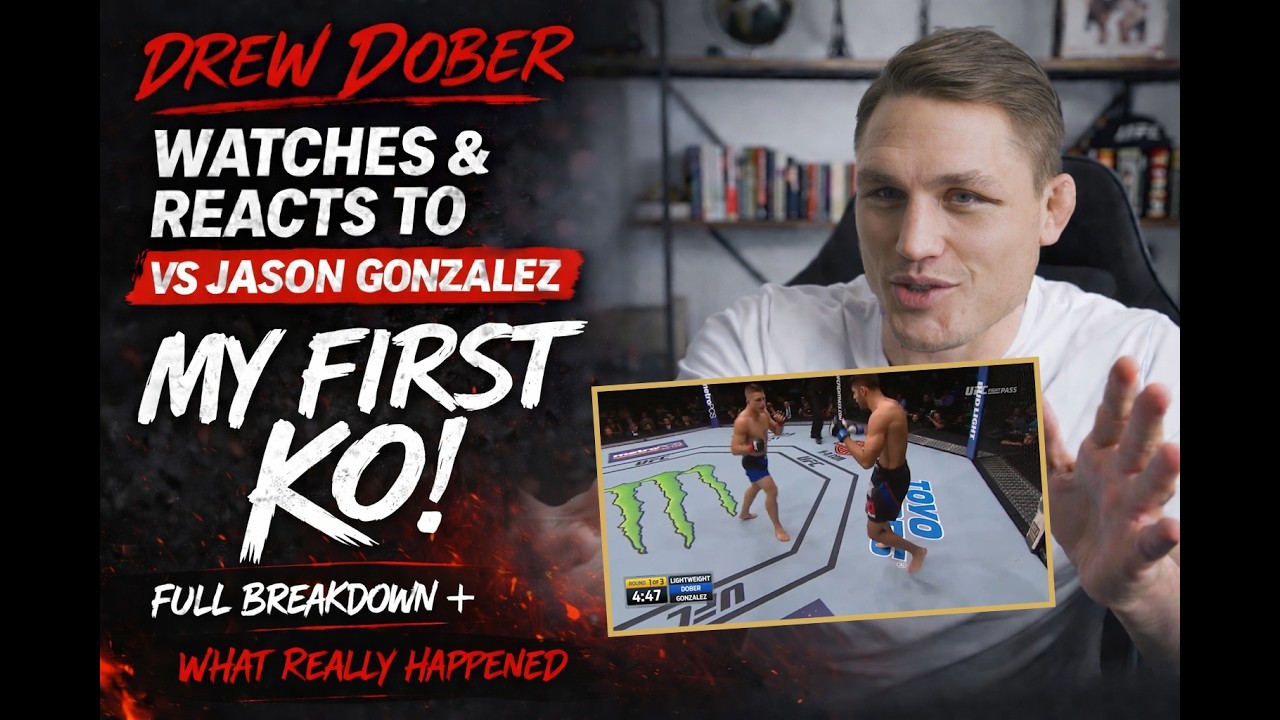
This was the fight against Jason Gonzalez. My first UFC finish. And watching it back, what stands out to me isn’t the knockout itself. It’s everything that had to happen before that punch landed.
Jason Gonzalez was a newcomer, and he was super tall. Six foot three at lightweight. That’s outrageous. I’m nowhere near six feet, so we had to deal with those problems from the start.
The challenge with a tall fighter isn’t just reach. It’s range. At the distance where a taller guy feels comfortable, he’s making the most contact. His jab is connecting. His kicks are landing clean. Every weapon he has is calibrated for that distance. If you get stuck out there, you’re fighting his fight.
The answer isn’t to stay on the outside and try to outbox him. The answer is to not let him settle into that range at all. Get in, get close, and change what the fight looks like.
That’s what I was working toward from the opening bell. Out of the gate, coming out guns blazing. I was looking for a takedown early, trying to establish that I was a threat on multiple levels, not just as a striker.
When I started mixing in the wrestling, people watching might have thought I was just going for takedowns. That’s part of it. But there’s something more important happening when you shoot.
What the wrestling does is it changes the rhythm of the fight. You don’t want to be just the striker. You want to give your opponent other things to look at, other threats to process, other problems to solve.
Once I showed him the wrestling, once I made him feel the possibility of a takedown, everything else opened up. His brain has to split its attention. He can’t just sit there and time my punches. He has to worry about level changes. He has to worry about his hips. He has to think about defending the shot.
That’s the moment you’ve been building toward. Because once I established the wrestling, I could fake it and come back with a hook overhand. He’s reacting to a takedown threat that isn’t coming, and the punch finds him before he can reset.
This is why MMA is different from pure boxing. The threat of the grappling changes everything about the striking, and the striking changes everything about the grappling. You can’t just be one thing.
After a low blow early in the fight, we reset. The way you restart after something like that: let him initiate. Don’t rush back in. Let the aggression come from him, then answer it.
He threw a head kick. My turn.
Fake. Fake. And then put a combination together.
That’s it. That’s the whole sequence. Two fakes to make him react, then fire for real. The fakes don’t need to be elaborate. They just need to be convincing enough to get a response. Once he commits to defending something that isn’t coming, the real punch has a path.
I knew that one landed well. The combination connected, and the key from that point was staying in the pocket. Stay in there. Stay in there. The more space he creates, the more opportunities he has to survive. So I kept pressing forward, using the fence to close the distance back down every time he tried to create separation.
The more times you roll the dice, the better chance you’re going to land that six. I kept throwing. Kept pressing. And we landed a couple of them right there.
“Fake. Fake. And then put a combination together. So you got to stay in that pocket. Stay in there. And then you get that finish. First knockout in the UFC.”
The first minute of most fights is a feeling-out process. You either catch your opponent by surprise early, or you spend that time building toward something. This one built. Eight to twelve weeks of hard camp, finally paying off in that moment.
There’s something fighters learn over time that nobody teaches explicitly. Outside the cage, before the walkout, everyone thinks you’re supposed to look intense and focused. I’ve always thought that was a little much. Fighters take themselves way too seriously in the walk out. I’d rather add some goofy behavior before fights. I can’t take myself seriously, and I don’t think everyone should take me seriously until the cage door closes.
Once it does, it’s a different story.
Inside, when the finish came, I held it together on the outside. That composure isn’t fake. It’s trained. The ability to stay measured in the middle of something that matters that much is a skill, same as the fakes and the combination.
But internally? Cloud nine. I finally got a knockout in the UFC. All that camp work. All those rounds. The coaches, the grind, the cuts, the weight. It landed right there.
That was the first decent paycheck my coaches had made with me. That meant something too.
That’s the whole picture of how the finish came together: close the distance against a taller fighter, mix in the wrestling to change the rhythm, fake to create the opening, stay in the pocket when you have him hurt, and keep rolling the dice until one lands clean. None of it happens without the piece before it.
For more technique breakdowns and fight analysis from Drew Dober, check out the full Beginner Striking for MMA series on the blog. If you want to understand the mechanics behind those leg kicks and level changes that set up the finish, the instructional posts break each piece down step by step.
Who was Drew Dober's first UFC knockout against?
Jason Gonzalez. Gonzalez was a newcomer who stood 6'3" at lightweight, which created real range and reach challenges that Drew had to solve from the opening bell.
How did Drew deal with fighting a much taller opponent?
By not letting Gonzalez settle into his preferred range. Drew came out early looking to establish a takedown threat, which forced Gonzalez to think about more than just his striking. Once the wrestling was on the table, the punching opened up.
What was the finishing sequence against Gonzalez?
Two fakes to get a reaction, then a combination. After a low blow reset the action, Drew let Gonzalez initiate, then answered with fake, fake, and fire. The fakes only needed to be convincing enough to make Gonzalez commit to defending something that wasn't coming.
Why did Drew keep pressing forward after the combination landed?
Because space is survival for a hurt fighter. The more room Gonzalez could create, the more chances he had to recover. Drew used the fence to close distance back down every time Gonzalez tried to separate.
What was Drew feeling after the finish?
On the outside, calm. He held it together and kept his composure. Internally, he was completely gone. Cloud nine. That was his first UFC knockout, and it was the first decent paycheck his coaches had made with him.
Drew Dober · Inner Circle